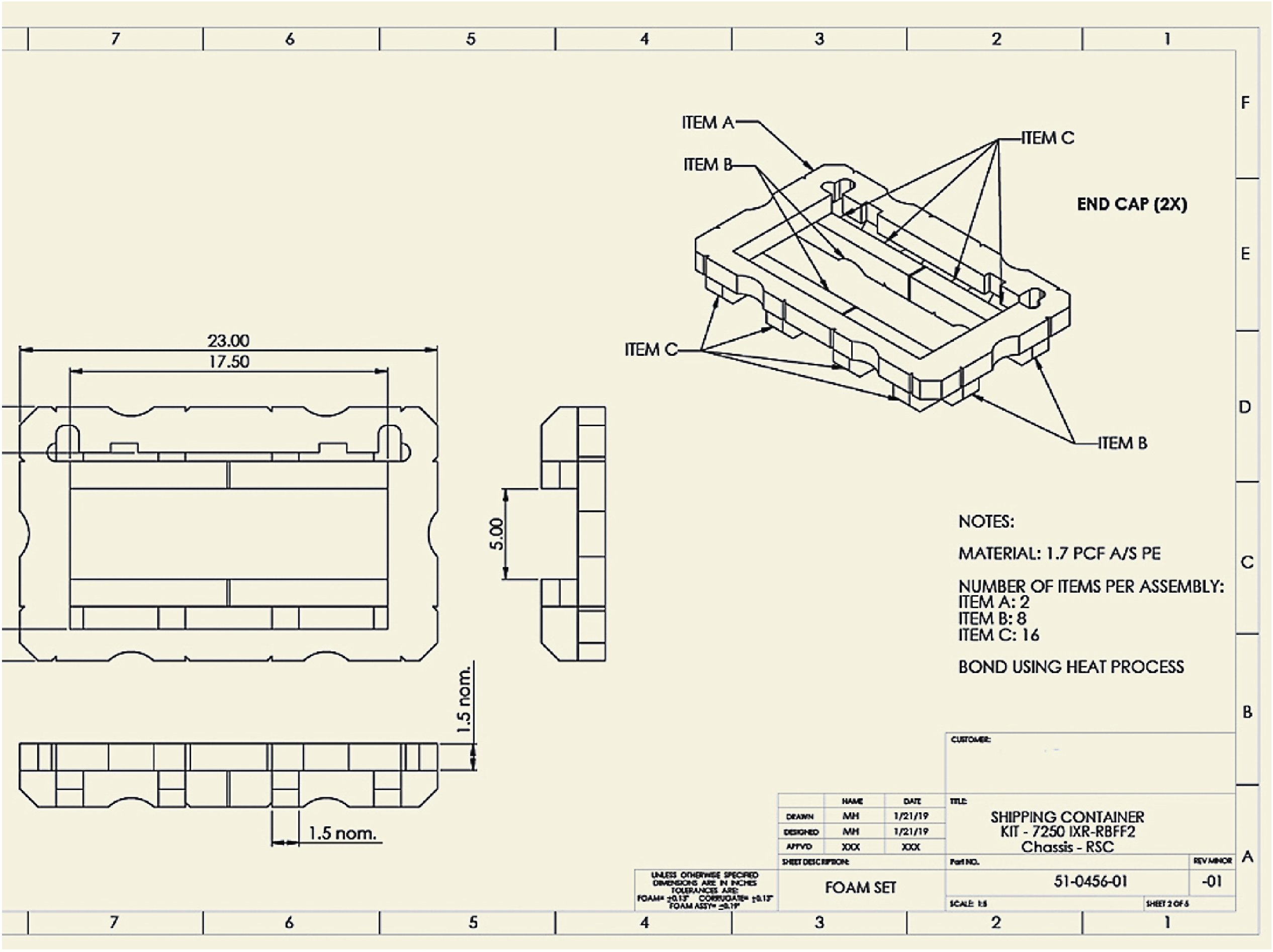

Foam sets & inserts
Strengthen your packaging protective capability against shock and vibration with an intelligently designed custom foam insert
Save time, cut operational expense and reduce admin headaches — partner directly with a foam manufacturer with inhouse foam insert designers and state-of-the-art cutting machines.
Why choose foam sets & inserts
Custom fit
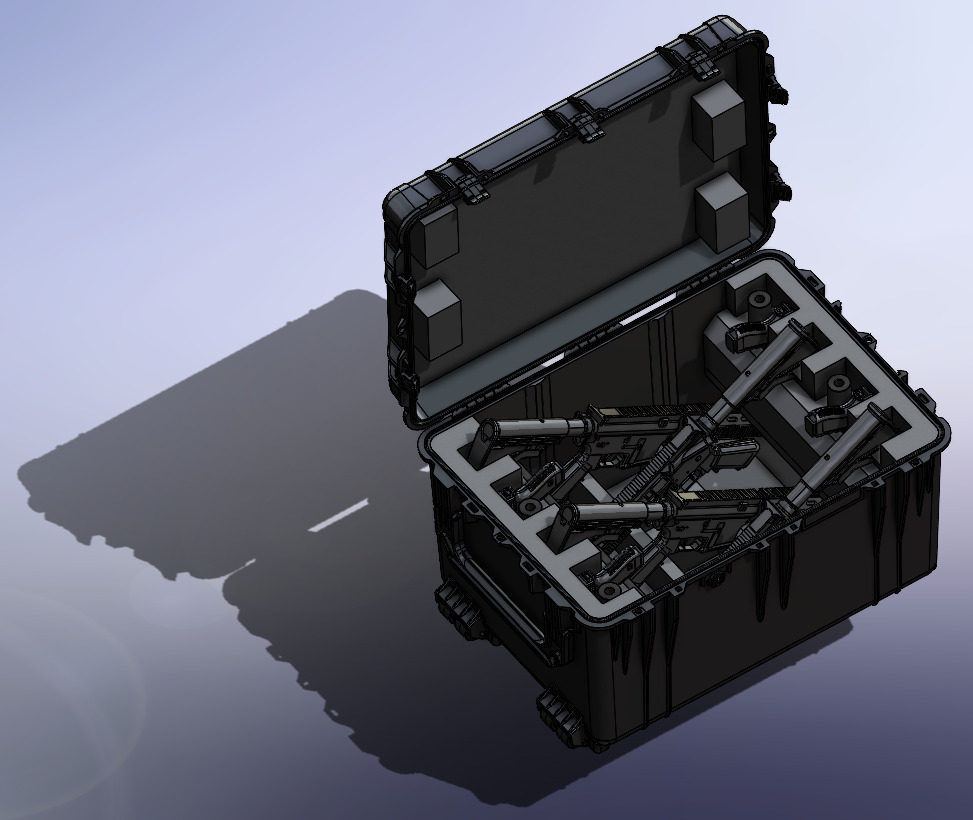
Fabricatable to fit any cavity such as a corrugated or plastic box, hard case, or ATA case
Shock & abrasion protection
Superior shock and vibration protection, or abrasion resistance
Organized storage
Can attractively organize multiple parts in a case or crate
Specialty foams
Specialty foams such as Ethafoam, cross-linked or beaded polyethene will protect even “class A” surfaces
Designed and manufactured to protect your product
Foam packaging has a profound impact on the reliability of your shipment. Fabricated foam can be designed to fit any cavity such as a corrugated or plastic box, hard case, or ATA case. Key factors like weight, fragility, and sensitivity determine the type and amount of foam needed for shock, vibration, and abrasion protection. A foam packaging solution should also include other benefits such as organizing multiple parts and improving product presentation, reinforcing your brand’s quality.


Precision packaging for safe transit
We are anti-shock and anti-vibration protective packaging specialists and have the engineering know-how to rapidly develop smart foam solutions to cushion and protect fragile, high-value equipment and products in transit.
Foam packaging specially designed and fabricated to protect your products
Our people understand the different physical properties of polyethylene, polypropylene, polyurethane, and other protective foams and how they interact with the weight, geometry, fragility, and sensitivity of a particular product.
We can identify the foam that will perform best for your application, then design, die-cut and assemble it for maximum in-transit protection with minimum expense.


In-house foam set design and manufacture at scale
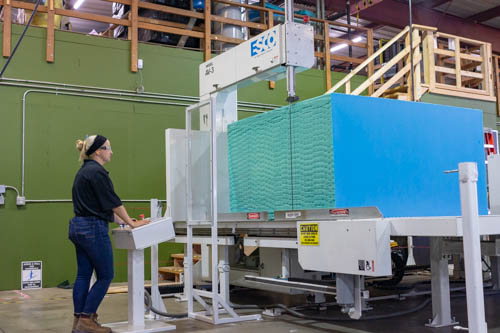
All our foam products designed and manufactured all under one roof at our Milpitas & San Diego, California facilities using leading-edge CNC and waterjet cutter equipment and flexible, high velocity manufacturing capabilities for maximum quality and highly-precise assembly of even the most complex foam set pieces.
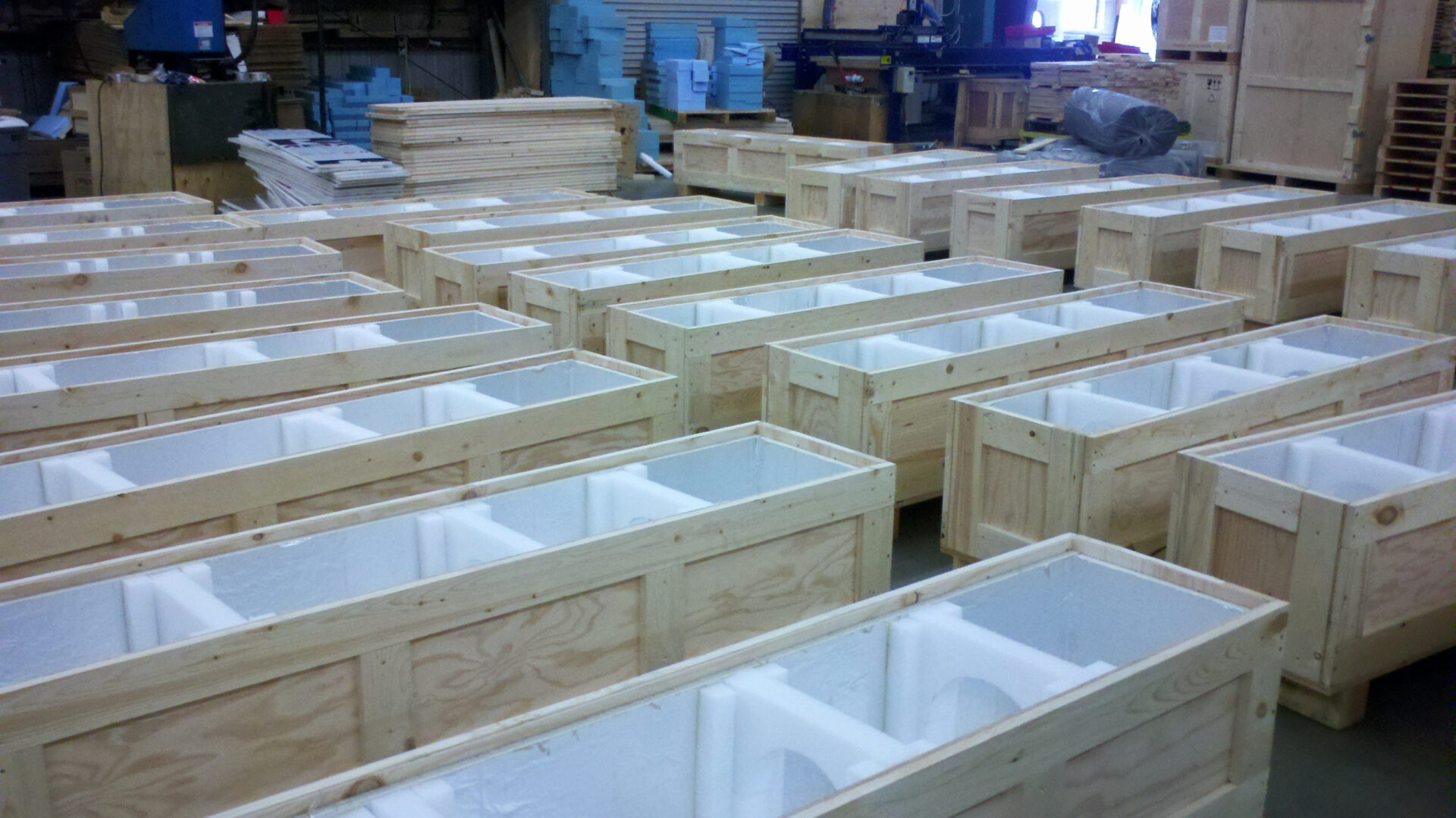
We maintain an inventory of many types of foam and can design and fabricate foam packaging entirely in-house in virtually any quantity — even on short notice.
APPLICATIONS
Engineered foam assemblies, inserts, and cushioning systems

Foam caps

Foam assemblies

Plain pads

Case inserts

Die-cut pads

Bars and pads for blocking

Floater base/ shock pallet

Cushioning systems

Floater skids and feet

ESD foam packaging
Not sure which foam system you need?

FOAM TYPES
Common industrial protective packaging foams
We can identify the foam that will perform best for your application, and design, die-cut and assemble it for maximum in-transit protection with minimum expense. Often the nature of the product will dictate the kind of foam cushioning system you require, but the specific type, density, thickness and overall amount of foam should be a combination of judgement, experience, and careful calculations based on performance needs, cost, and presentation.
When cost is an issue, standard foams work well and are easy to fabricate. If appearance and durability or cleanliness are more important, specialty foams can be used because they last longer, have better performance, and have a better look and feel.


Polyethylene
Polyethylene (PE) is a closed-cell, non-absorbent foam that is impervious to mildew, mold, rot, and bacteria. It is also highly resistant to chemicals. A medium-weight polyethylene foam provides excellent protection for products that have average to low fragility.
With the right design it can also protect lighter and more fragile products. It is great foam for positioning and cushioning. PE is available in extruded planks, or laminated sheets. PE is available in a wide range of thicknesses, densities and colors.
Crosslinked polyethylene
Cross-linked polyethylene (XLPE) foam is a high density, closed-cell foam that has a compact feel and resists water and chemicals.
XLPE has many of the same properties as polyethylene foam, and can protect class “A” surfaces. XLPE is used extensively in the packaging of medical products and equipment, and many multi-part presentation kits.
Polyurethane
Polyurethane (PU) is a common polymer used to make foam, particularly for furniture, but also for packaging. It has an elastic open-cell structure, and is relatively soft, which provides a wide range of performance especially useful for delicate and lightweight items, or those very sensitive to vibration.
Expanded polyethylene and polypropylene
Expanded polyethylene (EPE) and expanded polypropylene (EPP) — also referred to as beaded foam — are produced by “popping” or expanding and fusing with temperature and pressure, small beads of polymer in a mold. EPE is safe for Class A surfaces. Both EPE and EPP are used extensively in automotive and packaging applications where durability, multiple impact resistance and other demanding performance challenges must be met.
Electrostatic discharge foam
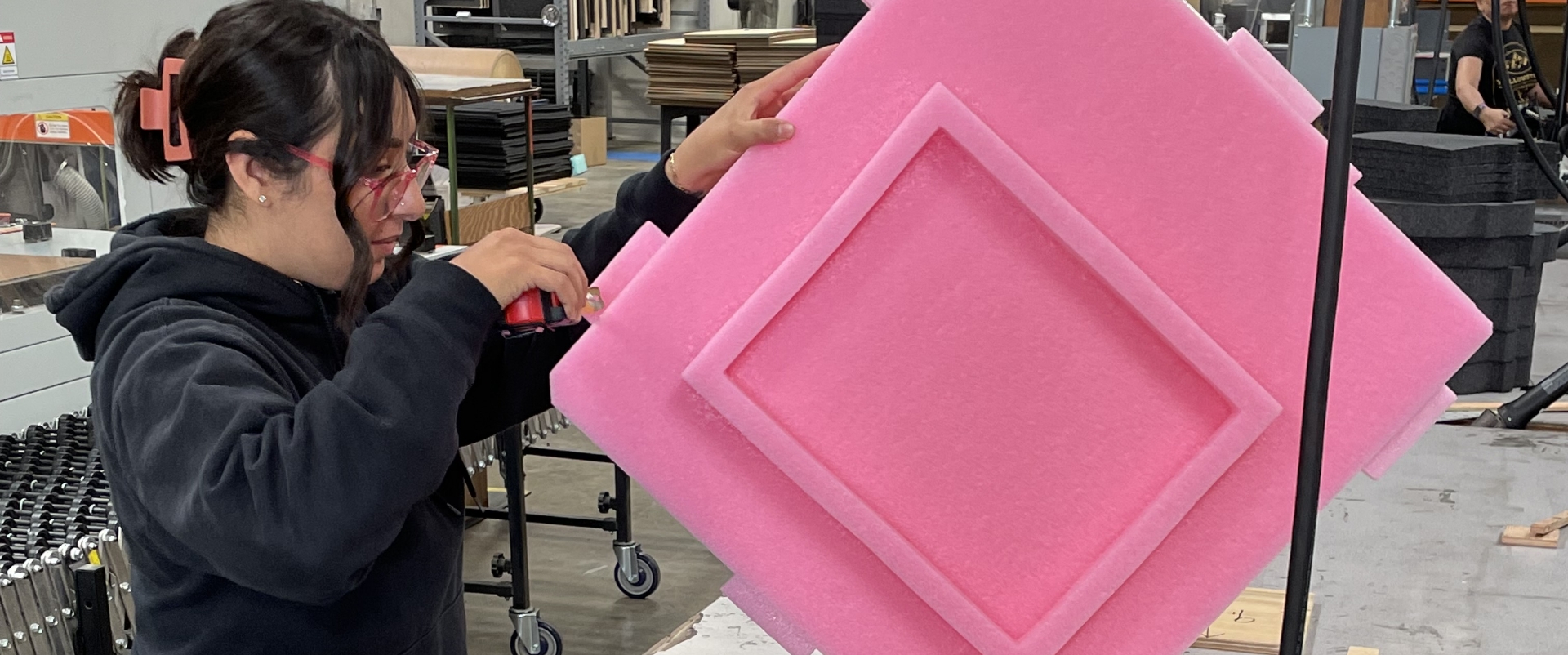
There are several types of Electrostatic discharge foam (ESD) including; Conductive Crosslinked foam that is an effective replacement for silver ESD bags, Pink Antistatic Polyethylene and Polyurethane foams that have a long shelf life, Antistatic Beaded Polyethylene foam that is cost-effective, tear-resistant and can be die-cut, saw cut, heat sealed and glued into almost any shape. Static control foam is typically used to protect batterries.